How Businesses Generate Revenue From Vending Machine Partnerships
A vending machine partnership is a trade: the location provides floor space and power, the operator provides equipment, inventory and labour, and the revenue is split. The model is simple. Whether it is worth doing depends on the terms and the site.
October 21, 2026 · 8 min read · Province & Vend
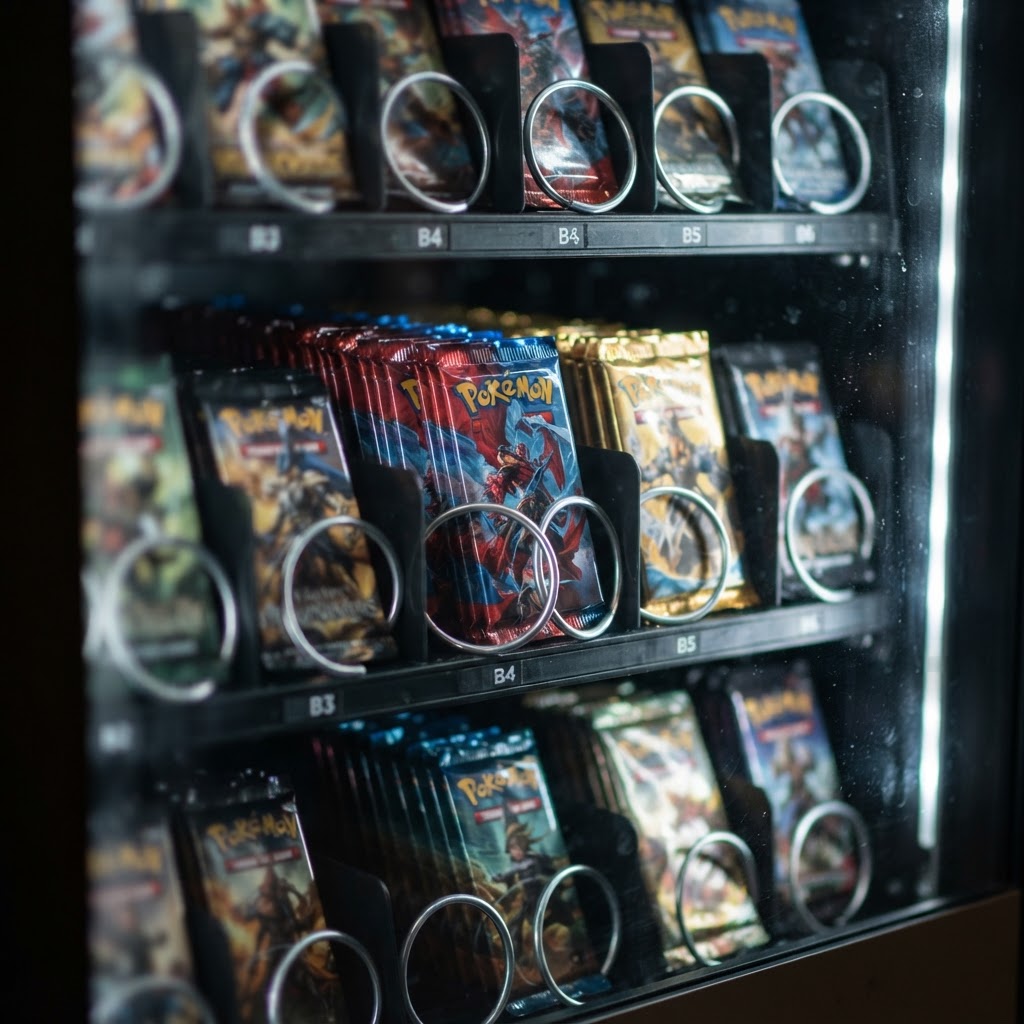
Business owners are usually shown a percentage and a machine photograph. That is not enough information to decide anything, because the percentage only means something against the cost of the space, the traffic the position actually has, and who carries the risk when product does not sell.
This is a framework for evaluating one of these offers, including ours.
The three commercial models you will be offered
Most vending arrangements fall into one of three shapes. Knowing which one you are being offered is the first step, because they put risk in very different places.
A revenue share puts the volume risk on the operator: if product does not move, the operator absorbs it. A lease or placement fee moves that risk to the host. Host-owned inventory moves the stock risk to the host as well, in exchange for more control over range and margin.
There is no universally correct model. A revenue share suits a location that wants an incremental line without capital or stock risk. Host-owned inventory can suit a specialist retailer who already buys at trade terms and knows exactly what their customers want.
- Revenue share: operator owns machine and inventory, host receives a percentage of gross sales
- Lease or placement fee: host pays for equipment or placement, and carries the volume risk
- Host-owned inventory: host buys the product, operator supplies hardware and service
What 'gross sales' has to mean in writing
A percentage of gross sales is only useful if gross sales is defined and observable. Ask how the figure is produced, whether the host can see the machine's transaction records, and how disputes are handled. A number reported from a spreadsheet once a quarter is a different proposition from a report generated by the machine itself.
Also ask what happens to refunds and chargebacks. A failed dispense is a reversal, and if that is not accounted for, the host share quietly becomes a share of money the operator never kept.
Reporting cadence
Monthly is normal. Whatever the cadence, it should be fixed, with the statement arriving whether or not somebody remembers to send it.
Term and exit
Ask how either side ends the arrangement and how quickly the equipment is removed. A partnership that cannot be exited cleanly is a lease with extra steps.
The cost side nobody itemises
The host's contribution is rarely zero, even when no invoice changes hands. There is floor space that could hold something else, electricity, and management attention: letting a technician in, keeping the unit in line of sight, dealing with a customer who is unhappy at 11pm.
That is usually a small and acceptable cost, but it is not nothing. A honest evaluation compares the host share against the value of the footprint, not against zero.
- Footprint: what else could occupy that square footage, if anything
- Power: a small draw, but the host pays the bill
- Attention: access for service visits and the occasional customer question
- Insurance and vendor paperwork, which some properties require
What the operator should carry
In a revenue share arrangement, the operator should be carrying the equipment, the inventory, the insurance on that equipment, the service calls and the product risk. If a proposal puts any of those on the host while still calling itself a revenue share, it is worth re-reading.
Ask specifically about damage and theft. If a machine is broken into, who pays, who files the report and who replaces the unit? The answer should be the operator, because the equipment is theirs.
Matching the category to the room
A partnership only produces revenue if the product suits the customer. Sealed trading cards fit family retail, convenience, entertainment and hobby-adjacent locations. Age-restricted vape vending fits licensed, controlled venues, and is prohibited in plenty of others.
An operator who offers the same machine for every site is telling you something. The category decision should be driven by who actually walks past the position, and the placement rules that apply to that product in that jurisdiction.
Questions worth asking before you sign
What exactly is the host share, and against what definition of sales? Is there any cost, deposit or minimum to the host? Who restocks, on what cadence, and in what hours? Who handles refunds? Who insures the equipment? How is the agreement ended?
A clear operator will answer all of it without a follow-up call. If the answers are vague until paperwork appears, treat that as the answer.
- Is the share of gross or net sales, and how is that figure generated?
- What is the term, the notice period and the removal process?
- Which party carries stock risk, damage and theft?
- What service window is agreed, and who is the named contact?
- Is the placement compliant with the property's rules and local licensing?
Partner with us
Have a space that fits?Let's look at it.
Tell us the address and what the room is like. We'll tell you whether it works there, and what a partnership would look like. No pressure, and no cost to you.
A short inquiry form · Answered by our family team