
The Growth of Automated Retail in the United States
Unattended retail stopped being a coin-operated side business when two things changed: payment went electronic, and machines started reporting their own status. Everything else that has happened since follows from those two shifts.
November 4, 2026 · 8 min read · Province & Vend
Vending is an old category. What is new is the economics of running one. Historically, a machine was only worth operating if you could justify a route visit to collect cash and refill coils, which pushed operators toward high-volume sites selling cheap, shelf-stable goods.
Electronic payment removed the cash logistics. Remote monitoring removed the guesswork. Together they made it viable to sell higher-value, lower-volume products in smaller sites. That is the whole story, and it explains most of what you now see in the category.
The cashless shift
Cash is expensive to handle in an unattended setting. It has to be collected, counted, transported and reconciled, and it creates an obvious theft target at a machine that sits alone in a corridor. Card readers removed all of that from the operation.
The second-order effect matters more. Once a purchase is electronic, every sale produces a record. Operators can see what sold, at what price, at what hour. Pricing and product mix stop being guesses based on an empty coil at the end of the week.
Higher price points become practical
A customer will tap a card for a twenty-dollar item in a way they would hesitate to feed notes into a bill acceptor. That opens categories that were never viable on a coin mechanism.
Remote monitoring changes the route
Machines that report stock and faults let an operator visit when it is needed. Fewer wasted visits means smaller sites can be served economically.
Labour pressure in retail and hospitality
Staffing a counter for a low-value transaction is hard to justify, and in many businesses the counter is already the bottleneck. A machine sells a small item without interrupting a queue or adding a shift.
The pattern shows up across categories: self-checkout in grocery, order kiosks in quick service, unattended parcel lockers in retail car parks. The common thread is not a preference for automation, it is that the labour is expensive and the transaction is simple.
Customer expectations moved too
People now expect to buy from a machine the way they buy from a website: tap, confirm, done. The friction that once made vending feel like a compromise has largely gone, and for younger customers a machine is not a novelty, it is just a shop that is always open.
That expectation supports categories that are bought on impulse and by people who already know what they want. Collectible products and age-restricted goods in licensed venues both fit that description.
What still holds the category back
Site acquisition, not hardware. A machine is only as good as its position, and the best positions are controlled by property owners, landlords, store managers and venue operators who have to be persuaded.
Service coverage is the other constraint. Unattended retail is a logistics business with a retail front end. If an operator cannot reach a machine to restock and repair it, the machine becomes a liability regardless of how good the product is.
What this means for a business owner
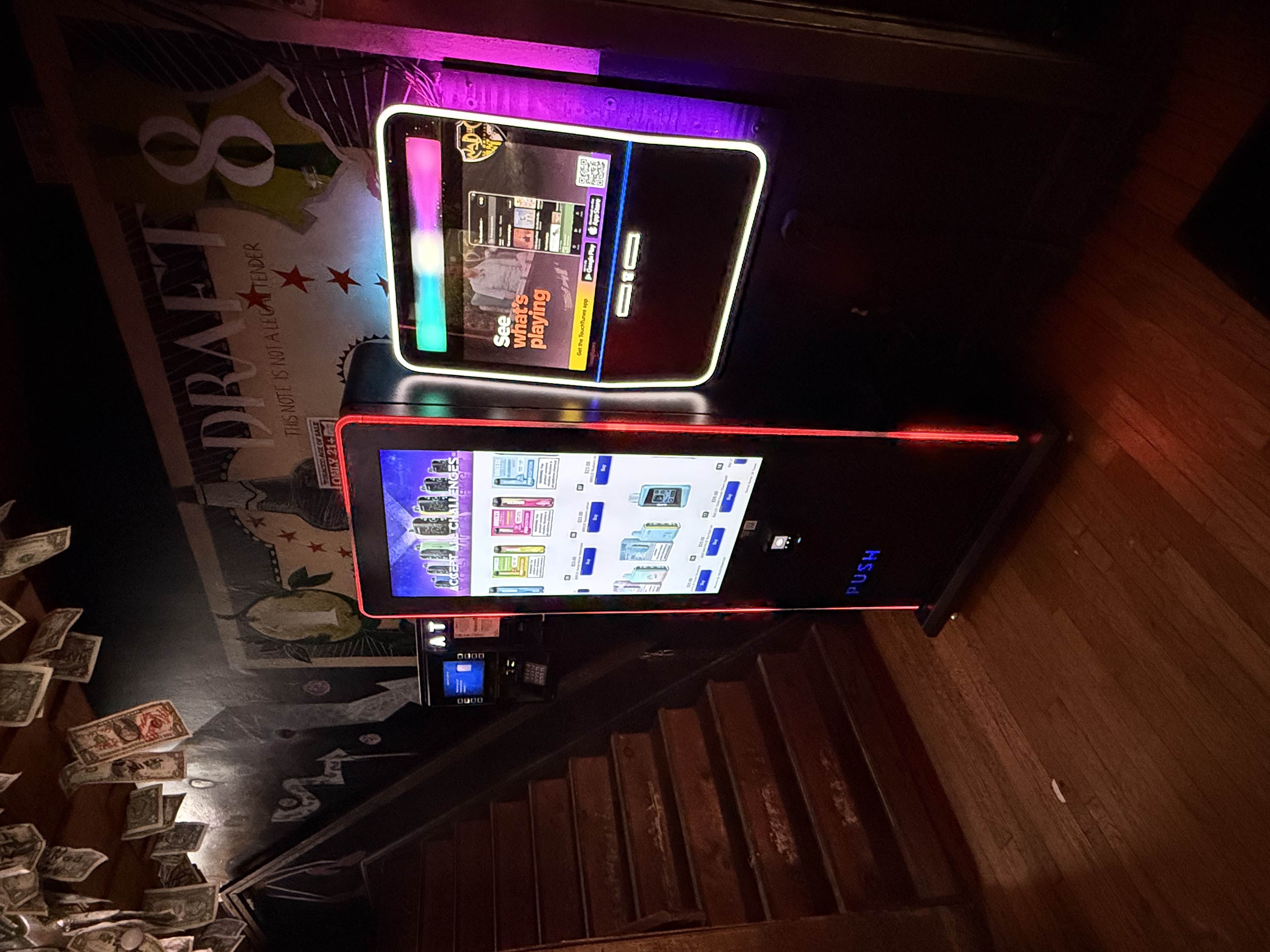
The practical consequence is that a location can now host a category it could never have sold itself. A gas station can carry sealed card product without buying inventory. A licensed venue can offer vape product without adding a cabinet and a staff member to run it.
The evaluation question has changed accordingly. It is no longer 'would my customers buy this from a machine?' It is 'is this the right category for the people who walk past this spot, and is the operator able to look after it?'
A note on the numbers
You will find confident figures about the size and growth rate of unattended retail. We do not repeat them here, because this page is not the place to launder a number nobody can trace back to a primary source.
What we can speak to is what we see operationally: electronic payment, remote monitoring and a route that can reach the site are the three things that determine whether a machine earns. Everything else is secondary.
Partner with us
Have a space that fits?Let's look at it.
Tell us the address and what the room is like. We'll tell you whether it works there, and what a partnership would look like. No pressure, and no cost to you.
A short inquiry form · Answered by our family team